What is Prompt Engineering?

What is Prompt Engineering and Why It Is Useful for Generative AI Models

Blog

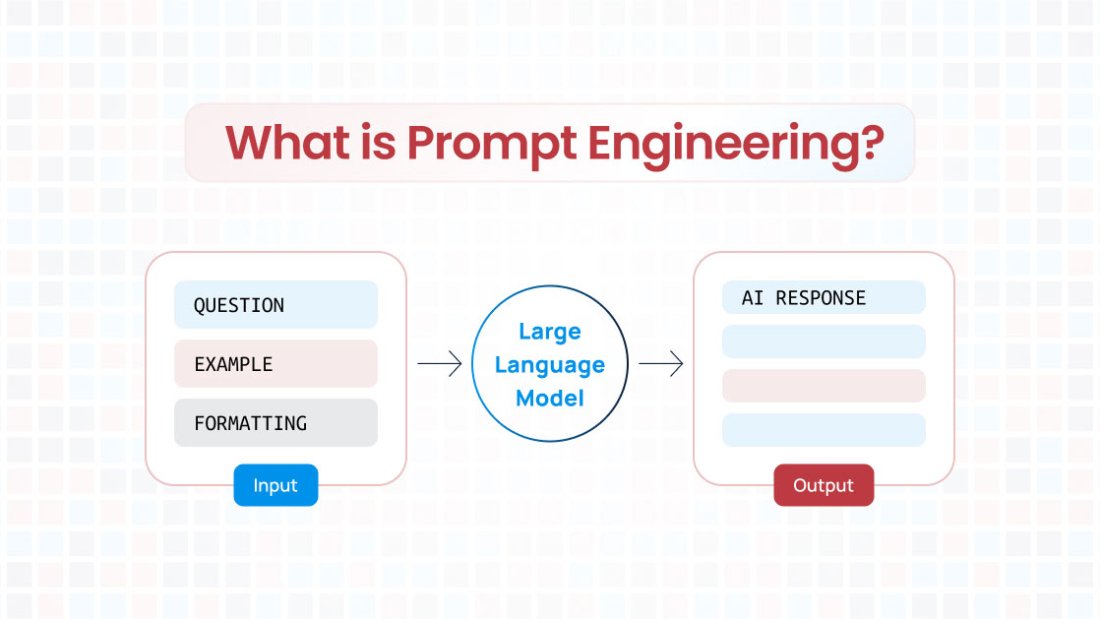
What is Prompt Engineering?

In the evolving landscape of artificial intelligence (AI), one term that has been gaining significant attention is “Prompt Engineering.” As generative AI models become more sophisticated, the importance of prompt engineering in leveraging their capabilities cannot be overstated. But what exactly is prompt engineering, and why is it so important? Let’s dive in to understand this aspect of AI.

Understanding Generative AI

Before we delve into prompt engineering, it’s essential to grasp the basics of generative AI. Generative AI refers to a subset of artificial intelligence that focuses on creating new content—such as text, images, music, and more—based on the data it has been trained on. Prominent examples of generative AI include language models like OpenAI’s GPT (Generative Pre-trained Transformer), which can produce coherent and contextually relevant text based on the input it receives.

What is Prompt Engineering?

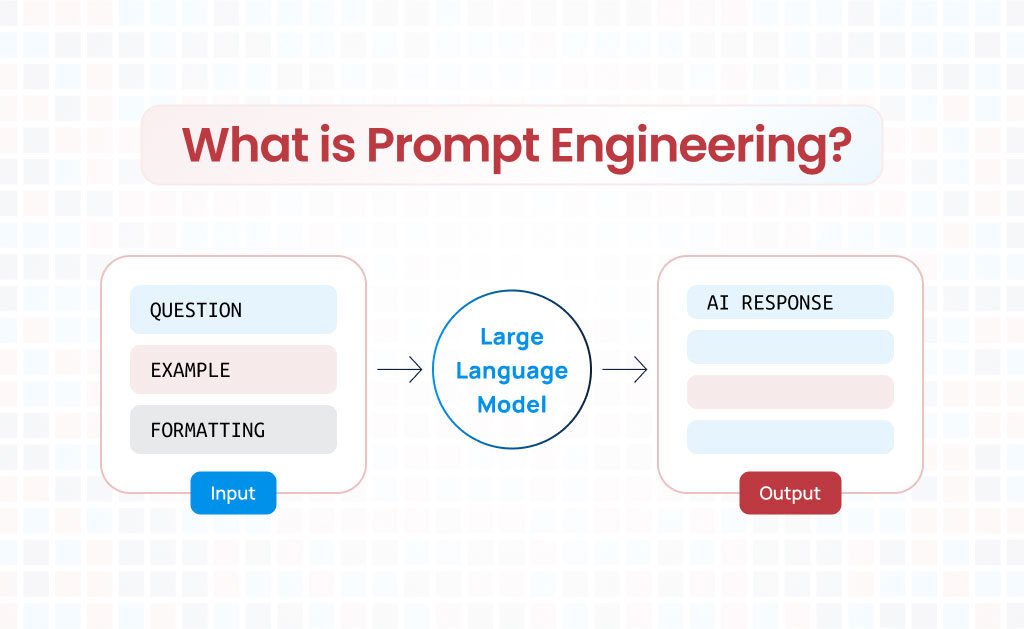
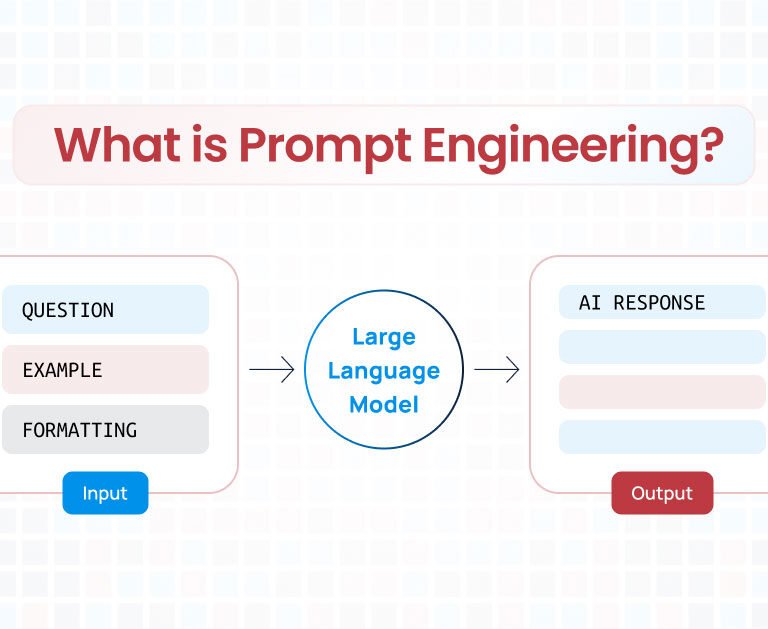
Prompt engineering involves designing and writing effective prompts to guide generative AI models to produce the desired output. Think of it as the art and science of asking the right questions or providing the right cues to an AI model to get the best possible results.

A “prompt” is the input or the initial text given to a generative AI model to start the content generation process. For instance, if you want an AI to write a story about a superhero, your prompt might be, “Be a story teller and write a comprehensive story about superhero named Astra who had incredible power and how he used his powers to help his community”.

Prompt engineering goes beyond just providing any input; it involves carefully constructing prompts to maximize the relevance, coherence, and creativity of the generated output. This process can significantly influence the quality of the results, making it a critical skill for anyone working with generative AI.

The Importance of Prompt Engineering

Now that we have a basic understanding of what prompt engineering is, let’s explore why it is so useful, especially in the context of generative AI models.

Enhancing Output Quality

One of the primary reasons prompt engineering is essential is that it directly impacts the quality of the AI’s output. A well-crafted prompt can lead to more accurate, creative, and contextually appropriate responses. Conversely, a poorly designed prompt can result in irrelevant, nonsensical, or low-quality outputs. By refining prompts, users can utilize the full potential of generative AI models.

Control and Direction

Generative AI models are incredibly versatile, capable of producing a wide range of content. However, without proper guidance, their outputs can be unpredictable. Prompt engineering allows users to steer the AI in a specific direction, ensuring that the generated content aligns with the desired objectives. Whether it’s writing a technical article, generating marketing copy, or creating fictional stories, prompt engineering provides the control needed to achieve targeted results.

Efficiency and Productivity

In a professional setting, efficiency and productivity are essential. Prompt engineering can save time and resources by reducing the need for extensive post-editing and refinement of AI-generated content. By providing clear and precise prompts, users can obtain high-quality outputs more quickly, streamlining workflows and enhancing overall productivity.

Customization and Personalization

Prompt engineering enables the customization and personalization of AI-generated content to suit specific needs and preferences. For instance, businesses can tailor prompts to reflect their brand voice and messaging, while educators can design prompts to create educational materials that resonate with their students. This level of customization enhances the relevance and effectiveness of the generated content.

Exploration and Creativity

Generative AI models are powerful tools for exploration and creativity. Prompt engineering allows users to experiment with different prompts to discover new ideas, perspectives, and solutions. By varying the inputs, users can uncover unexpected and innovative outputs, fostering creativity and inspiring fresh approaches to problem-solving.

Examples of Prompt Engineering in Action

To illustrate the impact of prompt engineering, let’s look at a few examples:

Content Creation:

For a blog post on the benefits of a healthy diet, a prompt like “Write an article about the benefits of a healthy diet, focusing on the impact on mental health and physical well-being” will yield more targeted content than a vague prompt like “Write about a healthy diet.”

Customer Support:

In a customer support scenario, a prompt such as “Provide a step-by-step guide to troubleshoot a slow internet connection” can help generate a detailed and helpful response, compared to a general prompt like “Help with internet issues.”

Creative Writing:

For a short story about a detective, a prompt like “Write a mystery story set in Victorian London, featuring a brilliant detective who solves crimes using unusual methods” will produce a more engaging narrative than simply prompting “Write a detective story.”

Types of Prompts:

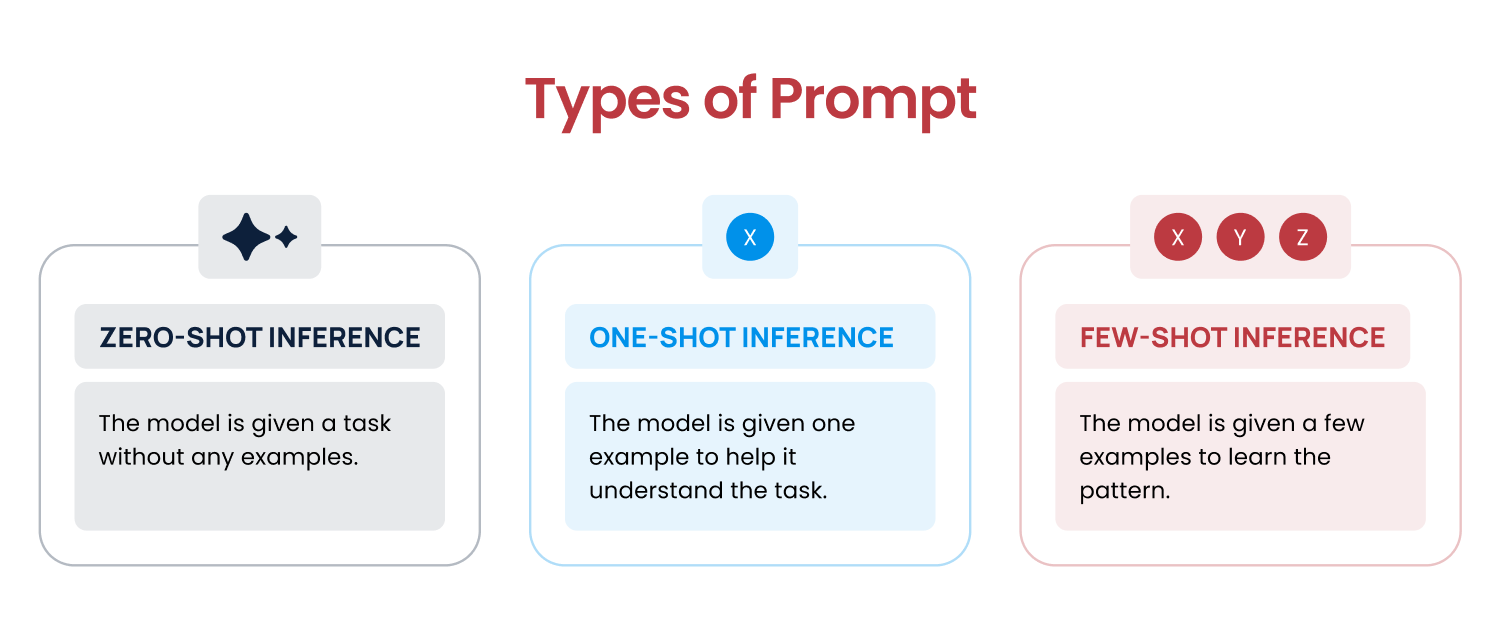
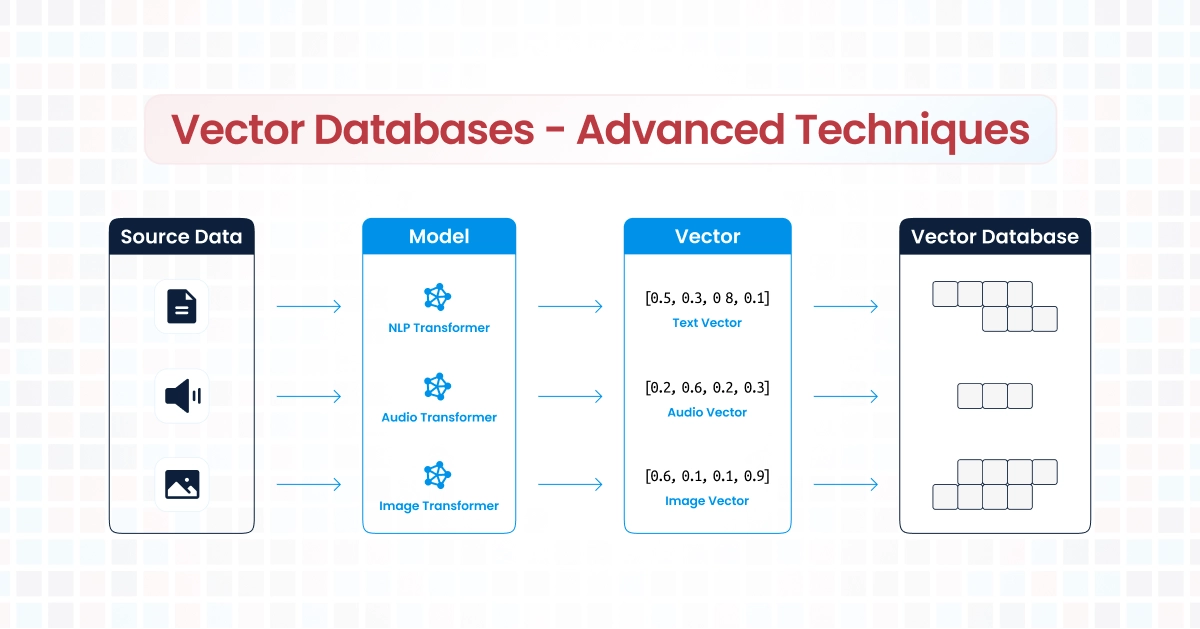
As we see in the examples above, prompts with more context  produce better results. This brings us to the concepts of zero-shot, one-shot, and few-shot inference, which are approaches to providing context and examples to the AI model. Let’s explore these types and how they impact the performance of generative AI models.

Zero-Shot Inference

Zero-shot inference refers to the scenario where the AI model is asked to perform a task without any specific examples or training on that particular task within the prompt. The model relies solely on its pre-existing knowledge and understanding of language patterns to generate a response.

Example Prompt for Zero-Shot Inference:

  • Task: Summarize a paragraph
  • Prompt: “Summarize the following paragraph: The quick brown fox jumps over the lazy dog. The fox is agile and fast, while the dog is slow and sleepy.”

Explanation: In this example, the AI is directly asked to summarize the paragraph without being given any specific examples of how to summarize. The model uses its general understanding of summarization to generate the output.

One-Shot Inference

One-shot inference involves providing the AI model with one example of the task to guide its response. This single example helps the model understand what is expected, improving the relevance and accuracy of the output.

Example Prompt for One-Shot Inference:

  • Task: Translate English to French
  • Prompt: “Translate the following sentence to French: ‘The cat sits on the mat.’ Example: ‘The dog barks loudly.’ translates to ‘Le chien aboie fort.'”

Explanation: Here, the AI model is given one example of an English sentence and its French translation. This example helps the model understand how to approach the task of translation for the new sentence.

Few-Shot Inference

Few-shot inference extends the concept of one-shot inference by providing the AI model with several examples of the task. This approach gives the model more context and a better understanding of the expected output, leading to even more accurate and relevant results.

Example Prompt for Few-Shot Inference:

  • Task: Generate a short poem
  • Prompt: “Create a short poem about nature. Examples: ‘The sun sets in the west, Painting the sky with colors best.’ ‘In the forest deep and green, Nature’s beauty can be seen.'”

Explanation: In this case, the AI model is provided with multiple examples of short poems about nature. These examples help the model grasp the style, structure, and theme expected in the generated poem.

Importance of Different Prompt Types

Each type of prompt—zero-shot, one-shot, and few-shot—inference has its own strengths and use cases:

1- Zero-Shot Inference:

  • Strengths: Useful for quick and broad tasks where specific examples are not necessary. It leverages the model’s general knowledge and versatility.
  • Use Cases: Quick queries, general information retrieval, basic tasks like summarization or translation without specific examples.

1- One-Shot Inference:

  • Strengths: Provides a balance between minimal context and improved performance. One example helps guide the model effectively without overwhelming it.
  • Use Cases: Simple tasks that benefit from a single guiding example, such as straightforward translations, basic text generation, or single-instance tasks.

1- Few-Shot Inference:

  • Strengths: Offers the highest level of context and accuracy. Multiple examples provide a clear pattern for the model to follow, enhancing the quality of the output.
  • Use Cases: Complex tasks requiring nuanced understanding, creative content generation, tasks involving specific styles or formats, and specialized problem-solving.
  •  

Conclusion

Prompt engineering is a vital skill of using generative AI. It empowers users to harness the full potential of AI models, enhancing the quality, relevance, and creativity of the generated content. By understanding and applying prompt engineering techniques, individuals and organizations can unlock new levels of efficiency, customization, and innovation in their AI-driven endeavors.

CloudKitect has developed multiple prompt templates tailored to different use cases. If you want to learn how a robust prompt engineering strategy can impact your specific needs, we are here to assist and guide you.

Talk to Our Cloud/AI Experts

This field is for validation purposes and should be left unchanged.
Name
Please let us know what's on your mind. Have a question for us? Ask away.

Search Blog

About us

CloudKitect revolutionizes the way technology startups adopt cloud computing by providing innovative, secure, and cost-effective turnkey AI solution that fast-tracks the digital transformation. CloudKitect offers Cloud Architect as a Service.

Subscribe to our newsletter

This field is hidden when viewing the form

Next Steps: Sync an Email Add-On

To get the most out of your form, we suggest that you sync this form with an email add-on. To learn more about your email add-on options, visit the following page (https://www.gravityforms.com/the-8-best-email-plugins-for-wordpress-in-2020/). Important: Delete this tip before you publish the form.
Generative AI Project Lifecycle Stages A Comprehensive Guide

Generative AI Project Lifecycle: A Comprehensive Guide

Blog

Generative AI Project Lifecycle Stages A Comprehensive Guide

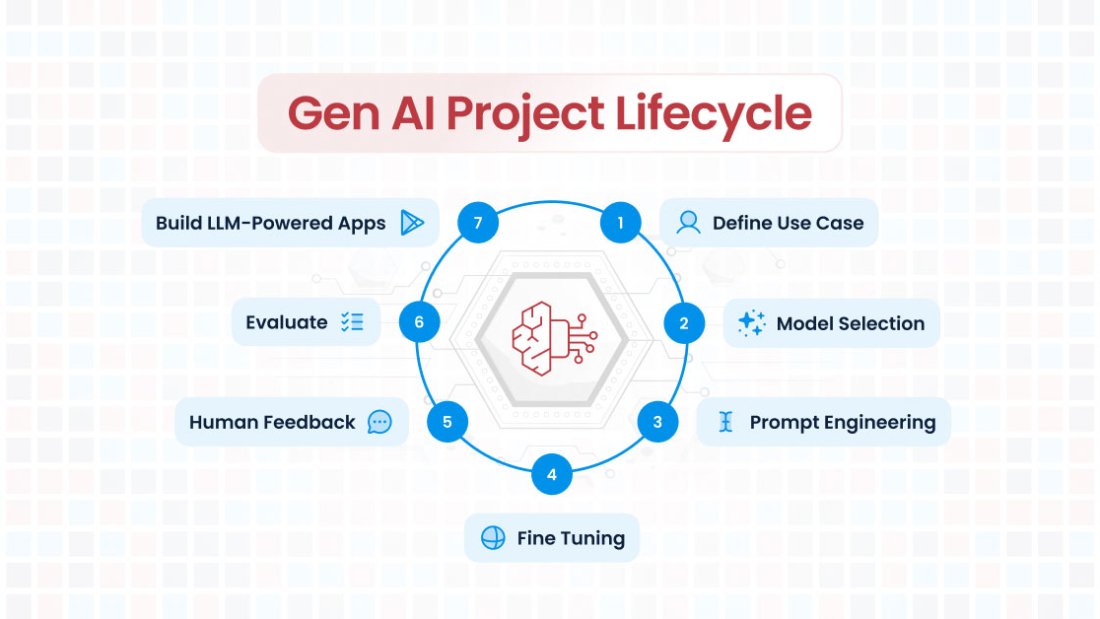
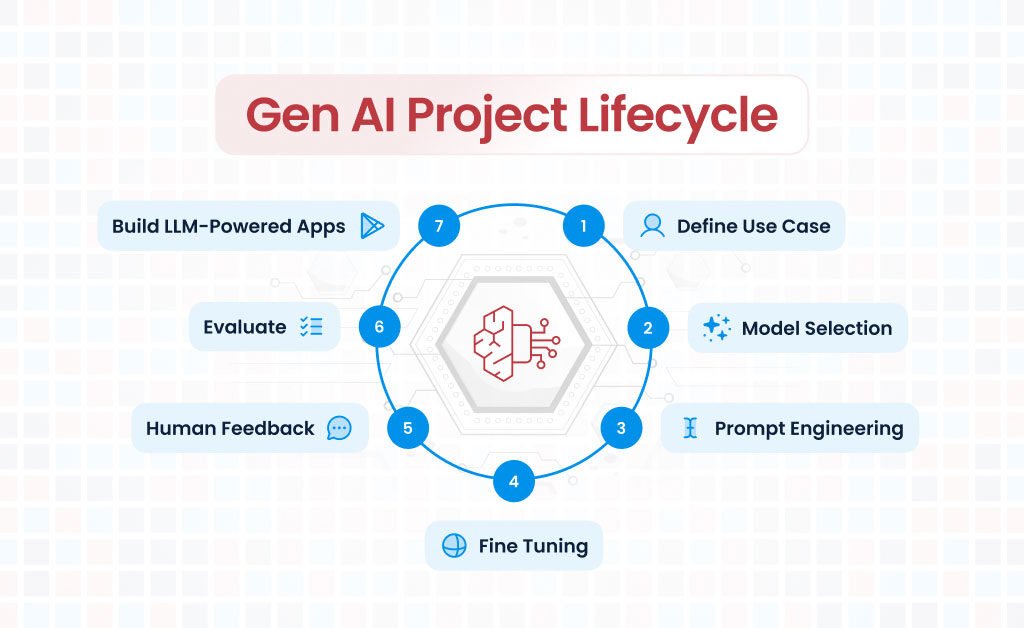
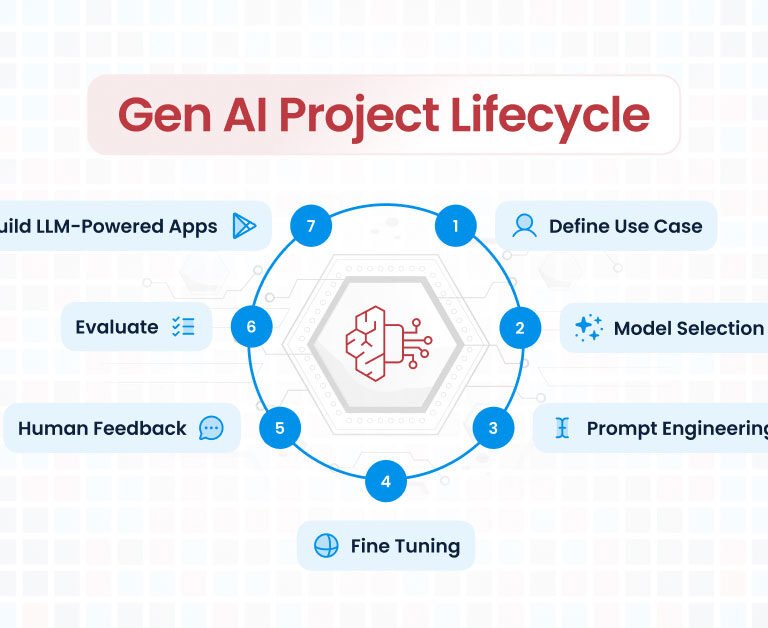
Generative AI has revolutionized the way businesses operate, offering immense potential to transform both front-office and back-office functions. Whether it’s automating content to writing for marketing, summarizing documents, translating languages, or retrieving information, generative AI applications can significantly enhance efficiency and productivity. This blog post outlines the lifecycle of a generative AI project, from defining the use case to integrating the AI into your applications.

Define Use Case

The first step in any generative AI project is to clearly define the use case. What do you want to achieve with AI? This decision will drive the entire project lifecycle and ensure that the AI implementation aligns with your business goals. Common applications include:

Front Office Applications

Content Writing for Marketing

Automating the creation of marketing content can save time and ensure consistency across all communication channels.

Information Retrieval

Quickly fetching relevant information from vast datasets can enhance customer service and support operations.

Back Office Applications

Document Summarizations

Automatically summarizing long documents can help in quickly understanding key points and making informed decisions.

Translations

Converting documents from one language to another can facilitate global operations and communication.

Choose Model

Once the use case is defined, the next step is to choose the appropriate model. You have two primary options:

Train Your Own Model

This approach offers more control and customization but requires significant resources, including data, computational power, and expertise.

Use an Existing Base Model

Leveraging pre-trained models can save time and resources. Different models are suited for different tasks, so it’s essential to choose one that aligns with your specific needs. For example, models like GPT-4 are versatile and can handle a variety of tasks, from text generation to translation.

Prompt Engineering

Prompt engineering is a crucial step in ensuring that the AI provides relevant and accurate outputs. This involves using in-context learning techniques, such as:

Zero-shot Learning

The model makes predictions based on general knowledge without any specific examples.

One-shot Learning

The model is given one example to make predictions.

Few-shot Learning

The model is provided with a few examples to improve its predictions.

By carefully designing prompts, you can guide the AI to produce outputs that are contextually appropriate and aligned with your requirements. To read more detailed article on prompt engineering read our blog here.

Fine Tuning

Fine-tuning the model involves optimizing its output using various parameters, such as:

Temperature

Controls the randomness of the output. Lower values make the output more deterministic, while higher values increase creativity.

Top-K Sampling

Limits the sampling pool to the top K predictions, ensuring more relevant outputs.

Top-P (Nucleus) Sampling

Selects from the smallest set of predictions whose cumulative probability exceeds a threshold P, balancing diversity and relevance.

Fine-tuning helps in refining the model’s performance and ensuring that it meets your specific needs.

Human Feedback

Incorporating human feedback is essential for improving the AI’s performance. Have humans evaluate the outputs, iterate on prompt engineering, and fine-tune the parameters to ensure that the model produces the desired results. This step helps in minimizing errors and hallucinations, where the model generates incorrect or nonsensical outputs.

Evaluate with Sample Data

Before full deployment, it’s critical to evaluate the model with new sample data. This ensures that the model performs well in real-world scenarios and can handle variations in the input data. Thorough testing helps in identifying and addressing any potential issues before they impact your operations.

Build LLM-Powered Applications Using APIs

The final step is to integrate the AI model with your applications using APIs. Ensure that your implementation makes the best use of computational resources and is scalable to handle increased loads. Proper integration allows you to leverage the full potential of generative AI, driving efficiency and innovation in your business processes.

Conclusion

Embarking on a generative AI project requires careful planning and execution. By following the steps outlined in this lifecycle—defining the use case, choosing the right model, prompt engineering, fine-tuning, incorporating human feedback, evaluating with sample data, and building applications—you can effectively use the power of AI to achieve your business goals. CloudKitect has taken care of the complex task of building and optimizing a generative AI platform on AWS. Now, you only need to integrate it into your environment using user-friendly and intuitive REST APIs.

Talk to Our Cloud/AI Experts

This field is for validation purposes and should be left unchanged.
Name
Please let us know what's on your mind. Have a question for us? Ask away.

Search Blog

About us

CloudKitect revolutionizes the way technology startups adopt cloud computing by providing innovative, secure, and cost-effective turnkey AI solution that fast-tracks the digital transformation. CloudKitect offers Cloud Architect as a Service.

Subscribe to our newsletter

This field is hidden when viewing the form

Next Steps: Sync an Email Add-On

To get the most out of your form, we suggest that you sync this form with an email add-on. To learn more about your email add-on options, visit the following page (https://www.gravityforms.com/the-8-best-email-plugins-for-wordpress-in-2020/). Important: Delete this tip before you publish the form.
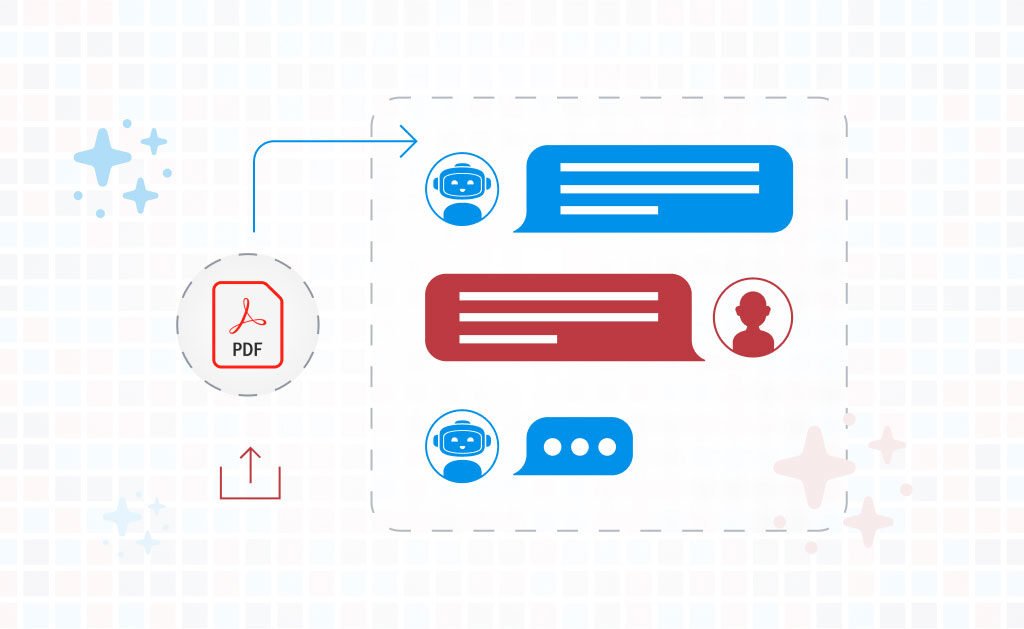
Converse with PDF data - Generative AI

Unlocking Data Insights: Chat with Your Data | PDF and Beyond

Blog

Converse with PDF data - Generative AI

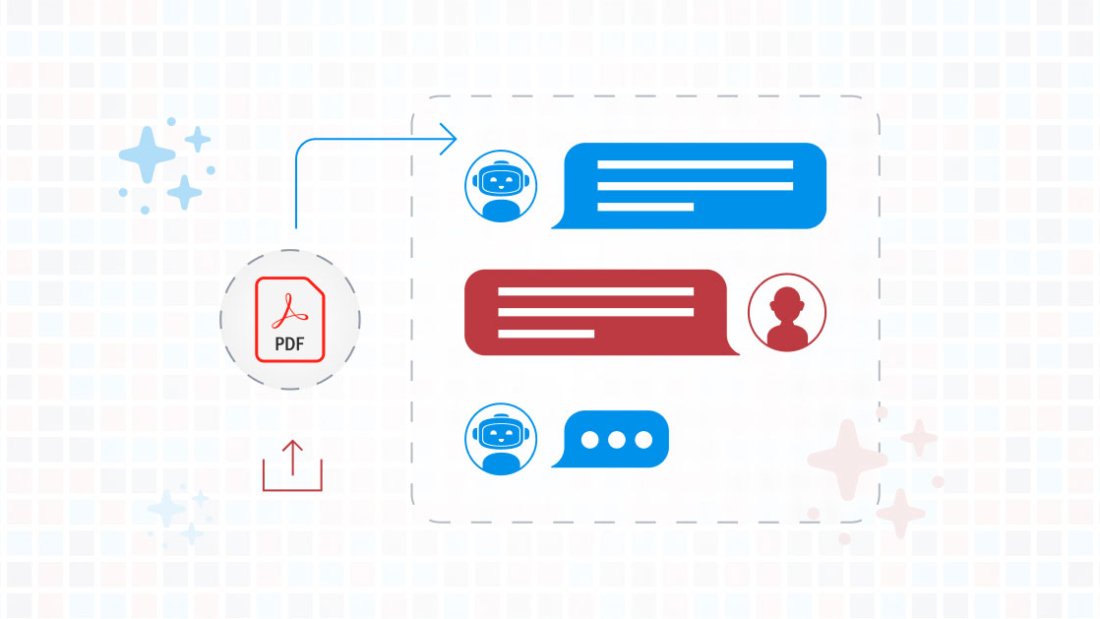
In today’s data-driven world, businesses and individuals alike are constantly seeking innovative ways to extract value from their vast repositories of information. One promising avenue that has gained significant traction is the integration of Generative AI solutions, particularly through the revolutionary concept of “Chat with Your Data”. This approach not only simplifies access to complex datasets but also empowers users to interact with their data in a natural, conversational manner.

Understanding "Chat with Your Data"

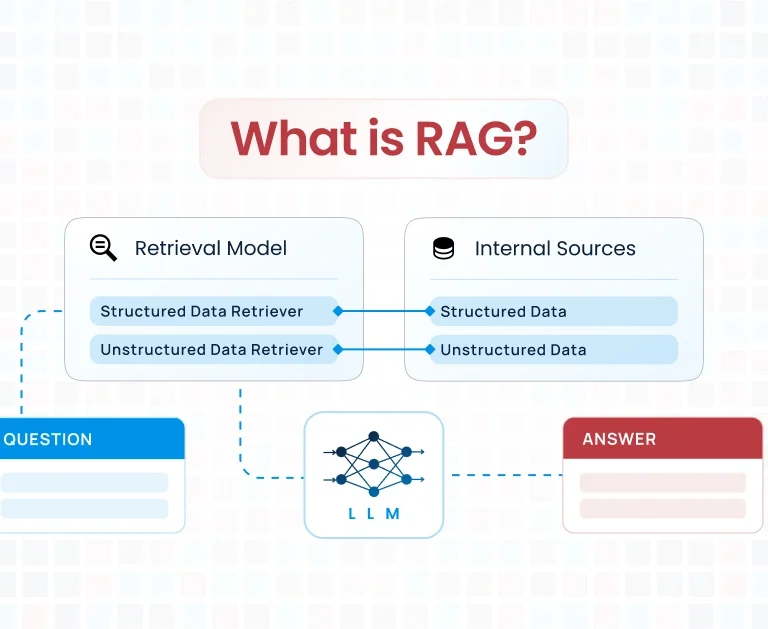
At its core, “Chat with Your Data” leverages advanced Generative AI techniques, specifically Retrieval-Augmented Generation (RAG), to facilitate seamless interactions with textual data. This methodology transcends traditional query-based approaches by enabling users to pose questions in natural language, like conversing with a knowledgeable assistant.

How It Works: The Process Unveiled

1. Data Processing and Embedding

  • Users begin by uploading various document formats (PDFs, Word files, CSVs, JSON, HTML) to their Generative AI platform such as CloudKitect GenAI platform.
  • The uploaded documents undergo tokenization, dividing them into manageable chunks. This preprocessing step is crucial for optimizing subsequent operations.
  • Utilizing embedding models, the text within each chunk is transformed into numerical representations known as embeddings. These embeddings serve as compact yet comprehensive vectors capturing the semantic essence of the text.

2. Vector Database Integration:

  • The generated embeddings are stored in a specialized vector database tailored for efficient similarity searches. CloudKitect’s platform leverages AWS’s robust OpenSearch service, ensuring scalability and reliability in handling large-scale datasets.

3. Executing Queries:

  • When a user submits a query or question, the text is likewise converted into its corresponding embedding using the same embedding model employed during document processing.

  • The platform then conducts a similarity search within the vector database, swiftly retrieving relevant content based on the semantic proximity of embeddings.

4. Generative Response:

  • The retrieved content, along with the user’s query, is formulated into a prompt and fed into a Generative Language Model (GLM).

  • Leveraging advanced natural language understanding capabilities, the GLM generates coherent responses that directly address the user’s query. This process seamlessly combines retrieval and generation techniques to deliver insightful answers.

Embracing OpenSearch for Enhanced Data Insights

AWS’s OpenSearch underpins the vector database infrastructure, providing a robust foundation for efficient data retrieval and management. This integration ensures not only rapid query processing but also supports the scalability demands of modern data-driven applications.

Conclusion:

In conclusion, “Chat with Your Data” represents a paradigm shift in how organizations utilize the power of their data assets. By integrating Retrieval-Augmented Generation techniques with AWS’s OpenSearch service, CloudKitect’s GenAI platform offers a compelling solution for businesses seeking to streamline data interactions and derive actionable insights effortlessly.

Empower your organization today with Generative AI solutions, and embark on a journey towards smarter, more intuitive data utilization. Experience firsthand the transformative impact of conversational data access and elevate your decision-making capabilities to new heights.

Ready to embark on your Generative AI journey? Explore CloudKitect’s GenAI platform and redefine how you engage with your data—effortlessly, intelligently, and innovatively.

Talk to Our Cloud/AI Experts

This field is for validation purposes and should be left unchanged.
Name
Please let us know what's on your mind. Have a question for us? Ask away.

Search Blog

About us

CloudKitect revolutionizes the way technology startups adopt cloud computing by providing innovative, secure, and cost-effective turnkey AI solution that fast-tracks the digital transformation. CloudKitect offers Cloud Architect as a Service.

Subscribe to our newsletter

This field is hidden when viewing the form

Next Steps: Sync an Email Add-On

To get the most out of your form, we suggest that you sync this form with an email add-on. To learn more about your email add-on options, visit the following page (https://www.gravityforms.com/the-8-best-email-plugins-for-wordpress-in-2020/). Important: Delete this tip before you publish the form.
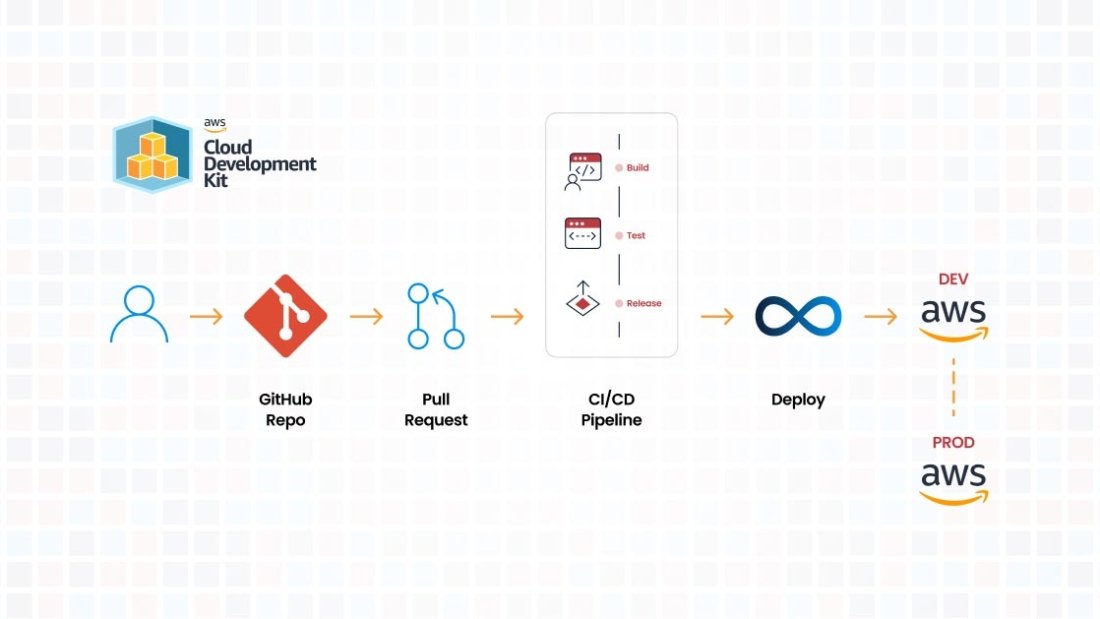
Flowchart - Deployable CDK App Framework

Streamline CDK Development with the Deployable CDK App Framework

Blog

Flowchart - Deployable CDK App Framework

Efficient software development is crucial for any organization striving to stay competitive in today’s market. Mature organizations adhere to well-defined software development standards, such as Gitflow, which involves the use of feature branches for development. Infrastructure as Code (IaC) can also benefit from these standards, especially when combined with a robust CI/CD pipeline. This blog post will guide you through developing an end-to-end CDK application using an open-source framework by CloudKitect Inc. called the Deployable CDK Application.

Pre-requisites

Before we start, ensure you have connected GitHub to your AWS account using OpenID Connect. AWS provides a small framework to set up your account quickly: GitHub Actions OIDC CDK Construct

Step 1: Setting Up the Project

To begin, create a new project using the scaffolding provided by the Deployable CDK Application framework. This framework leverages Projen, which allows you to define and maintain complex project configurations through code. Follow these steps to set up your project:

1. Create a new directory and navigate into it:

				
					mkdir my-project

  cd my-project


2. Initialize the project with Projen:

				
					npx projen new --from "@cloudkitect/deployable-cdk-app"


This command creates a Projen project with sensible defaults, including PR request templates, release versioning, and CI/CD pipelines for feature branches. You have the flexibility to change the defaults or add new project-specific configurations.

Step 2: Configuring the ProjenRC File

All changes to files managed by Projen will be done in the ProjenRC file (.projenrc.ts for TypeScript). Here is an example configuration:

				
					const project = new DeployableCdkApplication({
  name: 'my-test-app',
  defaultReleaseBranch: 'main',
  cdkVersion: '1.143.1',
  releaseConfigs: [{
    accountType: 'Dev',
    deploymentMethod: 'change-set',
    roleToAssume: 'role-arn',
    region: 'us-east-1',
  }],
});


The `releaseConfigs` allow developers to define various environments where the CDK app will be deployed. You can specify deployment methods such as `change-set`, `direct`, or `prepare-change-set`.

Step 3: Synthesizing the Project

After configuring the Projen file, run the following command to synthesize the project and create GitHub workflow actions for build and release pipelines:

				
					npx projen


Step 4: Initial Commit and Push

Commit your initial project setup to the main branch and push it to GitHub:

				
					git commit -m 'Initial project commit'
git push origin main


Step 5: Developing a Feature

Next, create a new branch for your feature development:

				
					git checkout -b feature-1


Implement your feature by updating the `MyStack` in `main.ts` with the necessary CDK constructs. For example, to create an S3 bucket:

				
					new s3.Bucket(this, 'MyBucket', {
  versioned: true,
});


Step 6: Building and Testing Locally

Run a local build to ensure everything works correctly:

				
					npx projen && npx projen build


If the build passes, commit and push your changes:

				
					git add -A
git commit -m 'feat: new bucket'
git push origin feature-1


Step 7: Creating a Pull Request

Go to GitHub and create a pull request. Once the pull request is created, it will trigger the CI/CD pipeline to build the feature branch. After the build passes, merge the pull request into the main branch. Merging will trigger the release process, creating a new release in GitHub and deploying the CDK resources to the defined environments.

Conclusion

Using the Deployable CDK Application framework simplifies the process of building, managing, and deploying CDK applications. By leveraging Projen and well-defined CI/CD pipelines, you can ensure efficient and reliable deployment of your infrastructure as code. This approach not only accelerates development but also maintains high standards of compliance and security.

For organizations looking to streamline their CDK development, the Deployable CDK Application by CloudKitect Inc. provides an excellent foundation to build upon.

Talk to Our Cloud/AI Experts

This field is for validation purposes and should be left unchanged.
Name
Please let us know what's on your mind. Have a question for us? Ask away.

Search Blog

About us

CloudKitect revolutionizes the way technology startups adopt cloud computing by providing innovative, secure, and cost-effective turnkey solution that fast-tracks the digital transformation. CloudKitect offers Cloud Architect as a Service.

Subscribe to our newsletter

This field is hidden when viewing the form

Next Steps: Sync an Email Add-On

To get the most out of your form, we suggest that you sync this form with an email add-on. To learn more about your email add-on options, visit the following page (https://www.gravityforms.com/the-8-best-email-plugins-for-wordpress-in-2020/). Important: Delete this tip before you publish the form.
Boosted the power of AI with CloudKitect Generative AI plaftorm

How to Harness the Power of AI with CloudKitect GenAI Platform


Blogs

Introduction

Artificial intelligence (AI) is no longer just a futuristic concept; it’s a practical tool that can drive real transformation. However, integrating AI into an organization frequently presents substantial challenges, especially in terms of sourcing skilled talent, the time needed to develop robust AI systems, and the associated costs.This is where CloudKitect GenAI Platform steps in, offering a streamlined, efficient solution that accelerates the AI adoption process.

The Challenges of Traditional AI Implementation

Talent Acquisition

One of the most significant barriers to AI integration is the difficulty in finding the right talent. AI specialists, including data scientists and machine learning engineers, are in high demand and short supply. Recruiting a team with the right skill set can be time-consuming and expensive, delaying the potential benefits AI can bring.

Development Time

Even with the right team in place, designing and building custom AI systems from scratch is a lengthy process. It can take months to develop, train, and deploy AI models that are tailored to specific organizational needs. This extended timeline can hinder agility and slow down the return on investment in AI technologies.

Accelerating AI Integration with CloudKitect GenAI Platform

CloudKitect GenAI Platform addresses these challenges by providing a comprehensive, ready-to-use environment where organizations can set up, deploy, and manage AI systems within hours not weeks or months. Here’s how CloudKitect transforms the approach to AI in business:

Rapid Deployment

With CloudKitect, you can bypass the lengthy development phases typically required to get AI systems up and running. The platform is designed to enable rapid provisioning of cloud and GenAI resources, allowing you to start utilizing AI capabilities in a matter of hours. This dramatically reduces the time to value for your AI initiatives.

Access to Pre-Built AI Solutions

CloudKitect offers a range of pre-built AI models and tools that cater to various business needs, from customer service automation and predictive analytics to data integration and processing. This ready-made suite of tools means you can focus on applying AI to your business challenges without worrying about the underlying technology.

Conversing with Your Data

One of the standout features of the CloudKitect GenAI Platform is its ability to facilitate dynamic interactions with your private data. The platform supports advanced data  ingestion, querying  and summarization capabilities, allowing you to “converse” with your data without exposing it externally. This means you can ask complex questions and receive insights in real-time, which is essential for making informed business decisions quickly.

Lowering the Barrier to Entry

CloudKitect’s, Cloud Architect as a Service not only speeds up the deployment but also democratizes access to AI by lowering the technical barriers to entry. Organizations do not need to invest heavily in specialized AI training or recruitment, as the platform is designed to be user-friendly and accessible to professionals with varying levels of technical expertise.

Generative AI Use cases:

Generative AI has a wide range of applications, especially when it comes to private data. These technologies can innovate and add value in various sectors by leveraging patterns and insights from data without compromising confidentiality. Here are some example use cases

  • Generative AI platform can parse through extensive legal databases, extracting pertinent case laws, statutes, and precedents relevant to your case. 
  • AI platform can analyze vast amounts of data, including market trends, historical performance, and personal financial goals, to generate customized investment portfolios. 

Why CloudKitect GenAI?

  • Rapid Deployment: Assemble a fully functional GenAI platform within hours, not weeks. Our developer friendly platform ensures that you are up and running quickly, with minimal technical know-how required.
  • Customized Insights: Ask questions, get summaries, and derive actionable insights from your private data. Our platform is designed to cater specifically to your organization’s unique needs.
  • Secure and Private: Your data never leaves your controlled environment. With CloudKitect GenAI, you maintain complete ownership and confidentiality of your data.
  • Whether you’re a startup or a large enterprise, our platform scales with your needs.

Conclusion

The integration of AI can significantly enhance operational efficiency, drive innovation, and offer substantial competitive advantages. However, the traditional path to AI adoption is fraught with challenges, particularly around talent acquisition and the time required to build and deploy effective AI systems. CloudKitect GenAI Platform offers a powerful solution by enabling rapid, efficient, and scalable AI deployment, transforming how organizations leverage AI to meet their strategic goals. By reducing complexity and eliminating common barriers, CloudKitect allows businesses to harness the full potential of AI quickly and effectively. Schedule a free consultation today to discuss your use case.

Talk to Our Cloud/AI Experts

Name


Please let us know what's on your mind. Have a question for us? Ask away.This field is for validation purposes and should be left unchanged.


Search Blog

About us

CloudKitect revolutionizes the way technology startups adopt cloud computing by providing innovative, secure, and cost-effective turnkey solution that fast-tracks the digital transformation. CloudKitect offers Cloud Architect as a Service.


Facebook


Twitter


Youtube

Related Resources
Subscribe to our newsletter


This field is hidden when viewing the form

Next Steps: Sync an Email Add-On

To get the most out of your form, we suggest that you sync this form with an email add-on. To learn more about your email add-on options, visit the following page (https://www.gravityforms.com/the-8-best-email-plugins-for-wordpress-in-2020/). Important: Delete this tip before you publish the form.


Power of Open Search as a Vector Database with CloudKitect

Harnessing the Power of OpenSearch as a Vector Database with CloudKitect

Blog

Power of Open Search as a Vector Database with CloudKitect

Introduction

In the realm of data management and search technology, the evolution of vector databases is changing the landscape. OpenSearch, an open-source search and analytics suite, is at the forefront of this transformation. With its capability to handle vector data, OpenSearch offers a unique and powerful solution for managing complex, high-dimensional data sets. This blog post delves into how OpenSearch can be effectively used as a vector database, exploring its features, benefits, and practical applications.

Understanding Vector Databases

Before diving into OpenSearch, let’s briefly understand what vector databases are. Vector databases are designed to store and manage vector embeddings, which are high-dimensional representations of data, typically generated by machine learning models. These embeddings capture the semantic essence of data, whether it be text, images, or audio, enabling more nuanced and context-aware search functionalities.

OpenSearch: A Versatile Platform

OpenSearch, emerging from Elasticsearch and Apache Lucene, has expanded its capabilities to include vector data handling. This makes it a potent tool for a variety of use cases that traditional search engines struggle with.

Key Features

  1. Vector Field Type: OpenSearch supports a vector field type, allowing the storage and querying of vector data alongside traditional data types.
  2. Scalability: OpenSearch is inherently scalable, capable of handling large volumes of data and complex queries with ease.
  3. Real-time Search: It offers real-time search capabilities, crucial for applications requiring instant query responses.
  4. Rich Query DSL: OpenSearch provides a rich query domain-specific language (DSL) that supports a wide range of query types, including those for vector fields.

Benefits of Using OpenSearch as a Vector Database

  1. Enhanced Search Accuracy: By using vector embeddings, OpenSearch can perform semantically rich searches, leading to more accurate and contextually relevant results.
  2. Scalable and Flexible: It can effortlessly scale to accommodate growing data and query demands, making it suitable for large-scale applications.
  3. Multi-Modal Data Handling: OpenSearch’s ability to handle various data types (text, images, etc.) in a single platform is a significant advantage.
  4. Cost-Effective and Open Source: Being open-source, it offers a cost-effective solution without vendor lock-in, and a community-driven approach ensures continuous improvement and support.
  5. AWS OpenSearch Serverless: OpenSearch being available as a serverless technology on AWS offers notable benefits. It ensures scalable and efficient management of search and analytics workloads, automatically adjusting resources to meet demand without manual intervention. This serverless approach reduces operational overhead, as AWS handles the infrastructure, allowing teams to focus on data insights and application development. Additionally, the pay-for-what-you-use pricing model of AWS serverless services provides cost-effectiveness, making OpenSearch more accessible and economical for businesses of all sizes.
Practical Applications

  1. Semantic Text Search: Implementing sophisticated text searches in applications like document retrieval systems, customer support bots, and knowledge bases.
  2. Image and Audio Retrieval: For platforms requiring image or audio-based searches, such as digital asset management systems and media libraries.
  3. Recommendation Systems: Enhancing recommendation engines by understanding user preferences and content semantics more deeply.
  4. Anomaly Detection: Leveraging vector analysis for detecting anomalies in datasets, useful in fraud detection, security monitoring, and predictive maintenance.

CloudKitect’s OpenSearch Serverless Component:

CloudKitect’s new OpenSearch serverless component streamlines the setup process of an OpenSearch cluster, making it remarkably fast and efficient. By leveraging this component, users can deploy an OpenSearch cluster in about an hour, a significant reduction from the traditional setup time. This acceleration is achieved through automated provisioning and configuration processes that handle the complexities of infrastructure setup and optimization. The component encapsulates best practices for OpenSearch deployment, ensuring a robust, scalable, and fully managed search and analytics environment with minimal manual effort. This swift deployment capability allows organizations to quickly leverage the power of OpenSearch for their search and data analytics needs, without the usual time-consuming setup hurdles.

Using only a few lines of code, your developers will be able to launch serverless OpenSearch cluster within an hour, moreover the tool is available in the programming language they are already familiar with so there is minimum learning curve.

Conclusion

OpenSearch’s support for vector database capabilities marks a significant advancement in search and analytics technology. By integrating the power of vector embeddings, OpenSearch offers a more nuanced, accurate, and scalable solution for handling complex search and analysis tasks. As organizations continue to grapple with increasingly complex data sets, the adoption of OpenSearch as a vector database provides a forward-looking approach to data management and search functionality. Whether for enhanced text searches, multimedia retrieval, or sophisticated recommendation systems, OpenSearch stands out as a versatile and powerful tool in the modern data ecosystem.

Talk to Our Cloud/AI Experts

This field is for validation purposes and should be left unchanged.
Name
Please let us know what's on your mind. Have a question for us? Ask away.

Search Blog

About us

CloudKitect revolutionizes the way technology startups adopt cloud computing by providing innovative, secure, and cost-effective turnkey solution that fast-tracks the digital transformation. CloudKitect offers Cloud Architect as a Service.

Subscribe to our newsletter

This field is hidden when viewing the form

Next Steps: Sync an Email Add-On

To get the most out of your form, we suggest that you sync this form with an email add-on. To learn more about your email add-on options, visit the following page (https://www.gravityforms.com/the-8-best-email-plugins-for-wordpress-in-2020/). Important: Delete this tip before you publish the form.
Infrastructure as Code - Diagram

Infrastructure as Code: Why It Should Be Treated As Code

Blog

Infrastructure as Code - Diagram

Introduction

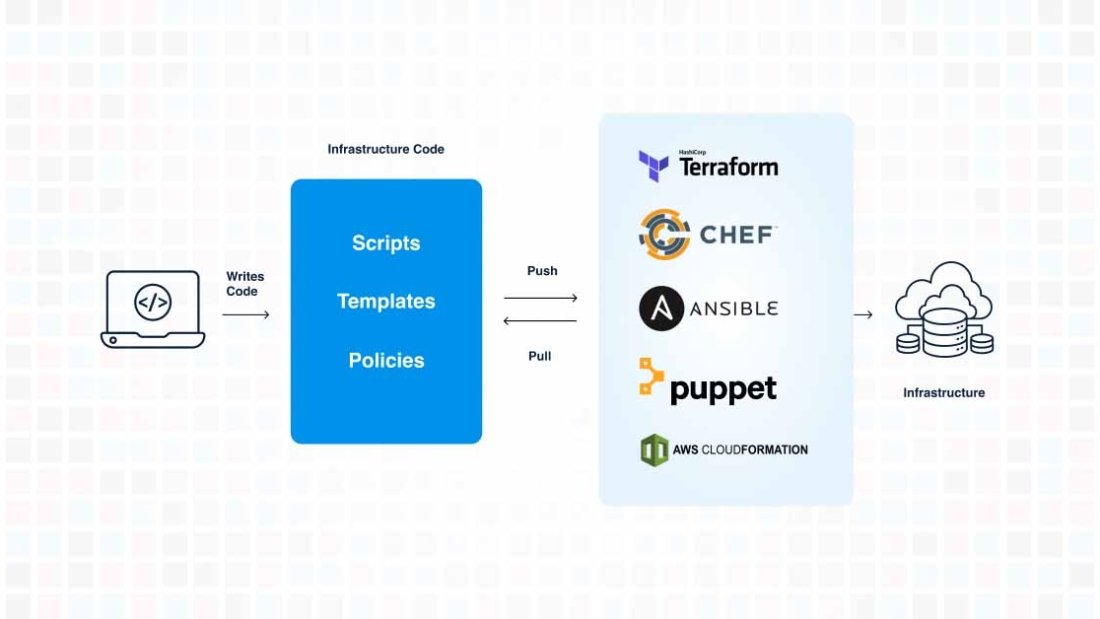
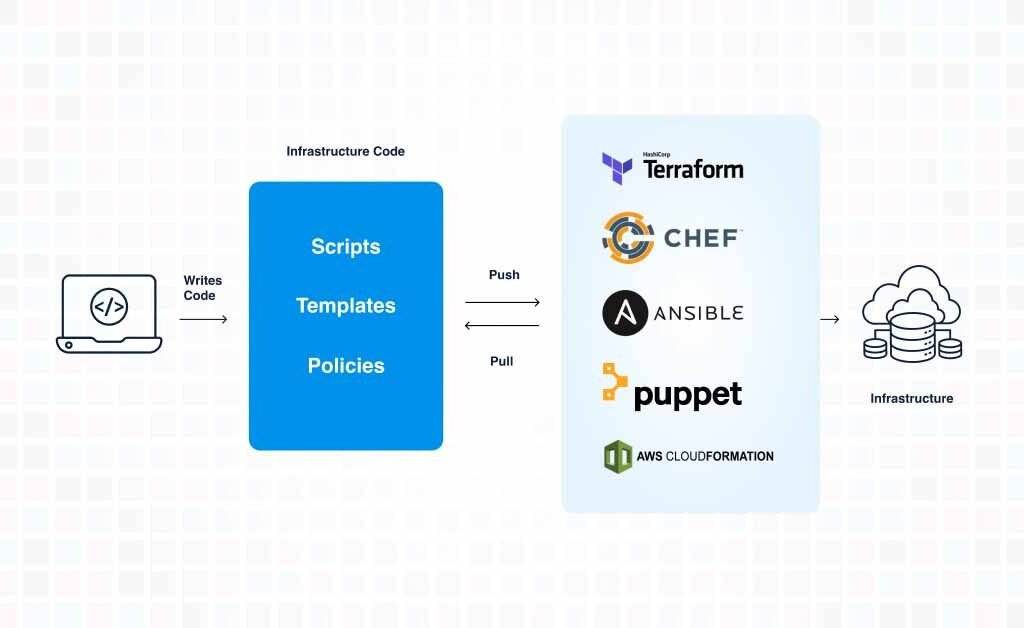
In the world of DevOps and cloud computing, Infrastructure as Code (IaC) has emerged as a pivotal practice, fundamentally transforming how we manage and provision our IT infrastructure. IaC enables teams to automate the provisioning of infrastructure through code, rather than through manual processes. However, for it to be truly effective, it’s crucial to treat infrastructure as code in the same way we treat software development. Here’s how:

1. Choosing a Framework that Supports SDLC

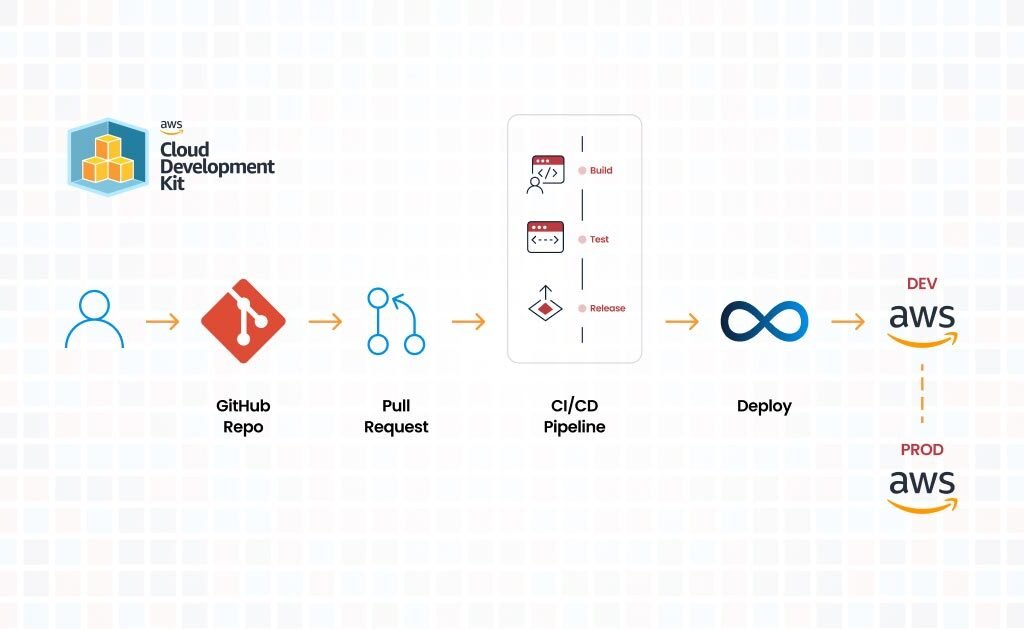
The Software Development Life Cycle (SDLC) is a well-established process in software development, comprising phases like planning, development, testing, deployment, and maintenance. To effectively implement IaC, it’s essential to choose a framework that aligns with these SDLC stages. Tools like AWS Cloud Development Kit – CDK not only support automation but also fit seamlessly into different phases of the SDLC, ensuring that the infrastructure development process is as robust and error-free as the software development process.

2. Following the SDLC Process for Developing Infrastructure

Treating infrastructure as code means applying the same rigor of the SDLC process that is used for application development. This involves:

  • Planning: Defining requirements and scope for the infrastructure setup.
  • Development: Writing IaC scripts to define the required infrastructure.
  • Testing: Writing unit test and functional tests to validate the infrastructure code.
  • Deployment: Using automated tools to deploy infrastructure changes.
  • Maintenance: Regularly updating and maintaining infrastructure scripts.

3. Integration with Version Control like GIT

Just as source code, infrastructure code must be version-controlled to track changes, maintain history, and facilitate collaboration. Integrating IaC with a version control system like Git allows teams to keep a record of all modifications, participate in code review practices, roll back to previous versions when necessary, and manage different environments (development, staging, production) more efficiently.

4. Following the Agile Process with Project Management Tools like JIRA

Implementing IaC within an agile framework enhances flexibility and responsiveness to changes. Using project management tools like JIRA allows teams to track progress, manage backlogs, and maintain a clear view of the development pipeline. It ensures that infrastructure development aligns with the agile principles of iterative development, regular feedback, and continuous improvement.

5. Using Git Branching Strategy and CI/CD Pipelines

A git branching strategy is crucial in maintaining a stable production environment while allowing for development and testing of new features. This strategy, coupled with Continuous Integration/Continuous Deployment (CI/CD) pipelines, ensures that infrastructure code can be deployed to production rapidly and reliably. CI/CD pipelines automate the testing and deployment process, reducing the chances of human error and ensuring that infrastructure changes are seamlessly integrated with the application deployments.

Conclusion

In conclusion, treating Infrastructure as Code with the same discipline as software development is not just a best practice; it’s a necessity in today’s fast-paced IT environment. By following the SDLC, integrating with version control, adhering to agile principles, and utilizing CI/CD pipelines, organizations can ensure that their infrastructure is as robust, scalable, and maintainable as their software applications. The result is a more agile, efficient, and reliable IT infrastructure, capable of supporting the dynamic needs of modern businesses.

Talk to Our Cloud/AI Experts

This field is for validation purposes and should be left unchanged.
Name
Please let us know what's on your mind. Have a question for us? Ask away.

Search Blog

About us

CloudKitect revolutionizes the way technology startups adopt cloud computing by providing innovative, secure, and cost-effective turnkey solution that fast-tracks the digital transformation. CloudKitect offers Cloud Architect as a Service.

Subscribe to our newsletter

This field is hidden when viewing the form

Next Steps: Sync an Email Add-On

To get the most out of your form, we suggest that you sync this form with an email add-on. To learn more about your email add-on options, visit the following page (https://www.gravityforms.com/the-8-best-email-plugins-for-wordpress-in-2020/). Important: Delete this tip before you publish the form.
CloudKitect - The game changer in cloud infrastructure provisioning

Why CloudKitect is Game-Changer in Cloud Infrastructure Provisioning

Blog

CloudKitect - The game changer in cloud infrastructure provisioning

Introduction

In the realm of cloud computing, the significance of a well-architected, efficient, and secure infrastructure cannot be overstated. This is where CloudKitect steps in, offering a comprehensive suite of components that address key non functional requirements in cloud infrastructure provisioning, allowing organizations to focus on functional requirements. Let’s dive into the ten core areas where CloudKitect excels:

1. Security: Adhering to Best Practices

Security is paramount in the cloud. CloudKitect’s architecture is built around industry best practices for security, ensuring robust protection against threats and vulnerabilities. This focus on security spans from data encryption to access control, offering peace of mind and a fortified environment.

2. Compliance with Various Standards

In today’s regulatory landscape, compliance is very important. CloudKitect adheres to a variety of industry standards like NIST, PCI, GDPR, etc ensuring that your cloud infrastructure isn’t just efficient and secure, but also in line with legal and regulatory requirements.

3. Cost-Effectiveness

CloudKitect components shines in their ability to tailor services to the environment, especially in development stages. By minimizing resource provisioning in these environments, CloudKitect helps in significantly reducing costs without compromising on functionality or scalability.

4. Audit Trails

Transparency and traceability are critical in cloud management. CloudKitect ensures that all management actions are thoroughly audited, providing clear trails for review and analysis. This feature is crucial for both security and compliance purposes.

5. Removal Policy Tailored to Environments

In production environments, the removal of resources is a delicate matter. CloudKitect recognizes this and implements a manual deletion policy for production environments, ensuring that critical data and services aren’t removed accidentally. This careful approach contrasts with more dynamic environments, where automation can safely expedite removal of resources to save cost.
6. Dedicated Monitoring and Alarms

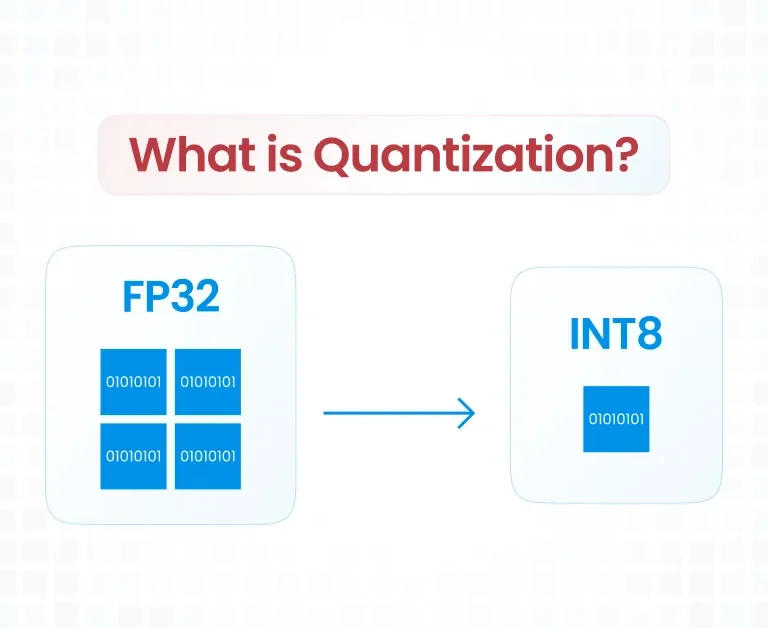
Each service within the CloudKitect framework has built in monitoring and alarms. This system is not just about tracking performance; it’s about proactively setting up alarms to preempt potential issues, ensuring the smooth operation of services and rapid response to any anomalies.

7. Optimized Performance

Performance optimization is a cornerstone of CloudKitect’s design philosophy. By aligning with best practice recommendations, CloudKitect ensures that your cloud services run at peak efficiency, balancing resource utilization with operational demands.

8. High Availability Support

CloudKitect patterns are designed to support architectures that require high availability. This ensures that your services remain operational and accessible, even in the face of challenges and unexpected demand spikes.

9. Centralized Log Management

Log management can be a complex task, especially in distributed environments. CloudKitect simplifies this by collecting logs in centralized accounts, making it easier to monitor and analyze data across various services and components.

10. Fault Tolerance

Lastly, CloudKitect patterns are robust enough to address fault tolerance effectively. This means that the system is capable of handling and recovering from faults, ensuring continuous service and minimizing downtime.

Conclusion

In conclusion, CloudKitect stands out as a comprehensive solution for provisioning and managing cloud infrastructure. By addressing these key areas, it not only ensures operational efficiency and security but also aligns with best practices and compliance standards, making it an ideal choice for organizations looking to leverage the power of cloud computing. If you are interested in discussing how CloudKitect can help expedite your project set up a FREE Consultation.

Talk to Our Cloud/AI Experts

This field is for validation purposes and should be left unchanged.
Name
Please let us know what's on your mind. Have a question for us? Ask away.

Search Blog

About us

CloudKitect revolutionizes the way technology startups adopt cloud computing by providing innovative, secure, and cost-effective turnkey solution that fast-tracks the digital transformation. CloudKitect offers Cloud Architect as a Service.

Subscribe to our newsletter

This field is hidden when viewing the form

Next Steps: Sync an Email Add-On

To get the most out of your form, we suggest that you sync this form with an email add-on. To learn more about your email add-on options, visit the following page (https://www.gravityforms.com/the-8-best-email-plugins-for-wordpress-in-2020/). Important: Delete this tip before you publish the form.
Terraform move to open source AWS CDK for AWS infrastructure

HashiCorp’s Terraform Licensing Change & Impact on AWS Users

Blog

Terraform move to open source AWS CDK for AWS infrastructure

Introduction

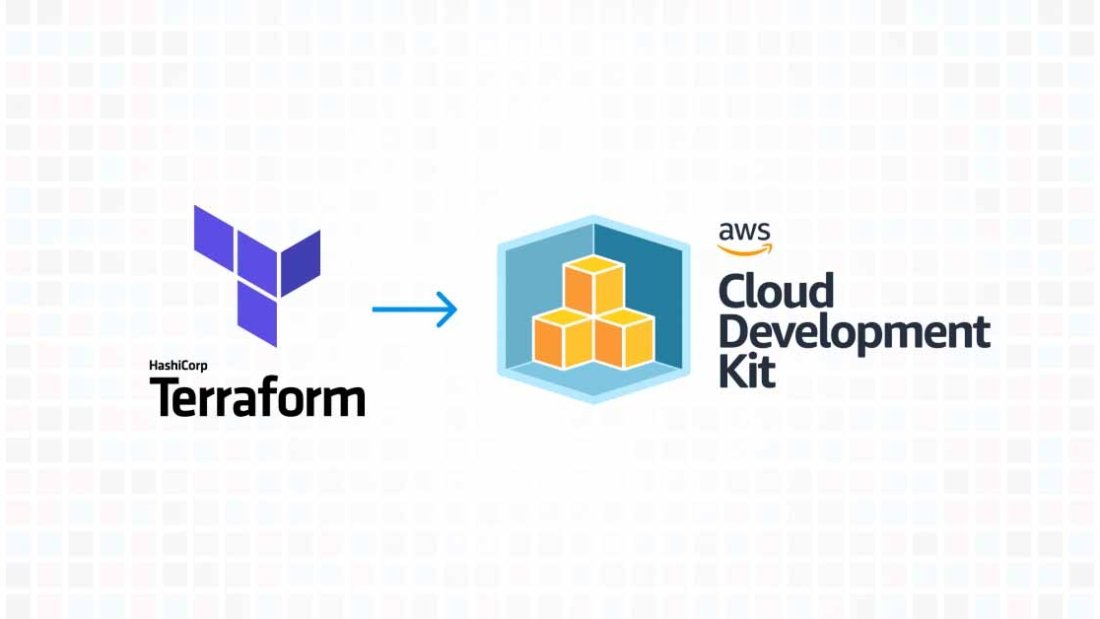
In a move that has sent ripples across the tech industry, HashiCorp, recently announced a significant shift in its licensing model for Terraform, a popular open-source infrastructure as code (IaC) tool. After approximately nine years under the Mozilla Public License v2 (MPL v2), Terraform will now operate under the non-open source Business Source License (BSL) v1.1. This unexpected transition raises important questions and considerations for companies leveraging Terraform, especially those using AWS.

Terraform has been a staple tool for many developers, enabling them to define and provide data center infrastructure using a declarative configuration language. Its versatility across various cloud providers made it a go-to choice for many. However, with this licensing change, the way organizations use Terraform might undergo a considerable transformation.

Implications for AWS Users and the Shift to Cloud Development Kit (CDK)

For businesses and developers focused on AWS, this change by HashiCorp presents an opportunity to evaluate AWS’s own Cloud Development Kit (CDK). The AWS CDK is an open-source software development framework for defining cloud infrastructure in code and provisioning it through AWS CloudFormation. It provides a high level of control and customization, specifically optimized for AWS services.

As a CIO or CTO selecting an Infrastructure as Code (IaC) tool for your organization, this licensing change may prompt reconsideration. With the importance of mitigating risk in tool selection, the appeal of open-source alternatives without the complexities of licensing issues becomes increasingly clear. This shift could significantly influence the decision towards truly open-source tools like AWS CDK over Terraform for streamlined, hassle-free IaC management especially if you are already using AWS as your cloud provider.

Why CloudKitect Leverages AWS CDK

CloudKitect, a provider of cloud solutions, has strategically chosen to build its products using AWS CDK. This decision is rooted in several key advantages:

  • Optimization for AWS: AWS CDK is inherently designed for AWS cloud services, ensuring seamless integration and optimization. This means that for companies heavily invested in the AWS ecosystem, CDK provides a more streamlined and efficient way to manage cloud resources.
  • Control and Customization: AWS CDK offers a high degree of control, allowing developers to define their cloud resources in familiar programming languages. This aligns well with CloudKitect’s commitment to providing customizable solutions that meet the specific needs of their clients.
  • Enhanced Security and Compliance: Given AWS’s stringent security protocols, using CDK infrastructures can be easily secured and tested to be compliant with various security standards, a critical consideration for enterprises.
  • Future-Proofing: By aligning closely with AWS’s own tools, CloudKitect positions itself to quickly adapt to future AWS innovations and updates, ensuring its products remain at the cutting edge.

Conclusion

HashiCorp’s shift in Terraform’s licensing model is a pivotal moment that prompts a reassessment of the tools used for cloud infrastructure management. For AWS-centric organizations and developers, AWS CDK emerges as a robust alternative, offering specific advantages in terms of optimization, customization, and security. CloudKitect’s adoption of AWS CDK for its product development is a testament to the kit’s capabilities and alignment with future cloud infrastructure trends. This strategic move may well signal a broader industry shift towards more specialized, provider-centric infrastructure as code tools.  If you would like us to evaluate your existing infrastructure, schedule time with one of our AWS cloud experts today.

Talk to Our Cloud/AI Experts

This field is for validation purposes and should be left unchanged.
Name
Please let us know what's on your mind. Have a question for us? Ask away.

Search Blog

About us

CloudKitect revolutionizes the way technology startups adopt cloud computing by providing innovative, secure, and cost-effective turnkey solution that fast-tracks the digital transformation. CloudKitect offers Cloud Architect as a Service.

Subscribe to our newsletter

This field is hidden when viewing the form

Next Steps: Sync an Email Add-On

To get the most out of your form, we suggest that you sync this form with an email add-on. To learn more about your email add-on options, visit the following page (https://www.gravityforms.com/the-8-best-email-plugins-for-wordpress-in-2020/). Important: Delete this tip before you publish the form.
How to structure IT Department for Digital Transformation

How to structure IT Department for Digital Transformation

Blog

How to structure IT Department for Digital Transformation

The traditional waterfall model, with its sequential and structured approach, has long influenced the organizational structure of IT departments in many businesses. In such a setup, responsibilities are typically distributed horizontally across various specialized teams. While this structure has the advantage of specialization, it also brings about inherent challenges related to hard coupling and interdependencies among teams.

Waterfall Based Team Structure

In a typical waterfall-based structure, we see a clear demarcation of roles and responsibilities:

  • Architects Team: The Architecture Team in an organization plays a crucial role in the planning, design, and implementation of IT systems and infrastructure. This team typically consists of experienced architects, such as Solutions Architects, Enterprise Architects, and Technical Architects, each specializing in different aspects of IT architecture.
  • Infrastructure Team: This team is the backbone of the department, handling all hardware-related aspects. Their work includes managing servers, networks, and ensuring all physical and virtual components are running smoothly.
  • Application Development Team: Focused on application development, this team translates user requirements and business needs into software solutions, often working in a siloed phase of the development lifecycle.
    Security Team: Tasked with safeguarding the system, the security team works on implementing and maintaining robust security protocols to protect the organization from cyber threats.
  • Site Reliability Engineering (SRE) Team: This team ensures that the deployed applications are reliable and available around the clock. They handle operational aspects, including monitoring, performance, and incident response.
  • Quality Assurance Team:  The QA team conducts various tests to identify bugs and issues in the software. This includes functional testing to verify that each feature works as intended, performance testing to ensure the software can handle expected loads, and usability testing to check if the user experience is intuitive and error-free.
  • DevOps Team: Bridging the gap between software development and operations, the DevOps team focuses on streamlining software releases and managing CI/CD (Continuous Integration/Continuous Deployment) pipelines.

Dependency Challenge

While each team has a critical role, this horizontal distribution leads to a tightly coupled system where dependencies are inherent:

  • Sequential Dependence: Each phase of the project must be completed before the next can begin. For instance, the architecture team must complete design before software team can do their work and software teams must complete development before the DevOps team can begin deployment automation, creating bottlenecks.
  • Misaligned Objectives: Each team, focusing on its area of expertise, might prioritize its goals, which aren’t always aligned with the overall project or product deliverables.
  • Communication Barriers: The need for constant communication across teams often leads to challenges, especially when each team has its timeline and priorities.
  • Integration Issues: Bringing together the different components created by each team can be challenging, particularly if there are inconsistencies or disparities in the work produced.

The landscape of IT project management is continuously evolving, and a significant shift is seen from the traditional waterfall model towards Agile development practices. One of the key features of Agile methodologies is the formation of cross-functional teams. Unlike the siloed approach in waterfall structures, Agile promotes collaboration and integration among various specialties. Let’s delve into how this Agile-based structure benefits IT projects and organizations.

Agile Cross-Functional Teams

Agile development is characterized by its flexibility, adaptability, and rapid response to change. Central to this approach is the concept of cross-functional teams. These are small, nimble groups composed of professionals from different disciplines, such as developers, testers, designers, and business analysts, working cohesively towards a shared objective.

Key Characteristics of Cross-Functional Agile Teams:

  • Diverse Expertise: Each member brings a unique skill set, providing a comprehensive approach to problem-solving.
  • Collaborative Environment: Team members collaborate closely, which fosters a deeper understanding and respect for each other’s work.
  • Autonomy and Accountability: These teams often manage themselves, promoting a sense of ownership and responsibility for the project’s success.
  • Focus on Customer Value: Agile teams prioritize customer needs and feedback, ensuring that the product aligns with market demands.

Advantages of Agile Cross-Functional Teams

  • Enhanced Communication and Collaboration: The barrier between different departments is broken down, fostering better communication and collaboration. This leads to more innovative solutions and faster problem resolution.
  • Increased Flexibility and Adaptability: Agile teams can pivot quickly in response to feedback or changes in the project scope, making them highly adaptive to change.
  • Faster Time-to-Market: With an emphasis on iterative development and MVPs (Minimum Viable Products), Agile teams can deliver products to market faster.
  • Continuous Improvement: Regular retrospectives are a staple in Agile, allowing teams to reflect on their performance and continuously improve their processes.
  • Higher Employee Satisfaction: Working in a dynamic, collaborative environment often leads to higher job satisfaction among team members.

Implementing Agile Cross-Functional Teams

  • Encourage a Shift in Mindset: Moving from a waterfall to an Agile approach requires a cultural shift in the organization, prioritizing flexibility, collaboration, and continuous learning.
  • Provide Training and Resources: Teams should be given adequate training in Agile methodologies and access to tools that facilitate Agile practices.
  • Establish Clear Roles and Responsibilities: While Agile teams are collaborative, it’s essential to have clear roles to ensure accountability and clarity in task ownership.
  • Foster an Environment of Trust: Leadership must trust teams to self-manage and make decisions, empowering them to take ownership of their projects.
  • Regular Feedback Loops: Incorporate regular feedback from stakeholders and team members to guide the project’s direction and improvement.

As more organizations embark on their journey to cloud computing, the need for a dedicated team to guide and streamline this transition has become increasingly apparent. Enter the Cloud Center of Excellence (CCoE) – a specialized team composed of cloud experts from various domains. The CCoE’s role is pivotal in ensuring that an organization’s move to the cloud is not only successful but also aligns with best practices and business objectives. Let’s explore the importance and functions of a Cloud Center of Excellence in modern organizations.

The Role of a Cloud Center of Excellence

A Cloud Center of Excellence serves as the nerve center for an organization’s cloud initiatives. It’s a cross-functional team that brings together experts in cloud infrastructure, security, operations, finance, and other relevant areas. The key responsibilities of a CCoE include:

  • Establishing Best Practices: Developing and disseminating cloud best practices across the organization to ensure efficient and secure use of cloud resources.
  • Guiding Cloud Strategy: Assisting in strategic planning and decision-making processes related to cloud adoption, migration, and management.
  • Fostering Collaboration: Bridging the gap between various departments, ensuring that cloud initiatives are aligned with overall business goals.
  • Managing Cloud Governance: Implementing and overseeing governance frameworks to manage risks, compliance, and operational efficiency in the cloud.
  • Promoting Skill Development: Identifying training needs and providing resources for upskilling employees in cloud-related technologies and processes.
Why Your Organization Needs a CCoE

  • Standardization: A CCoE helps standardize cloud deployments across an organization, reducing complexity and promoting consistency in cloud usage.
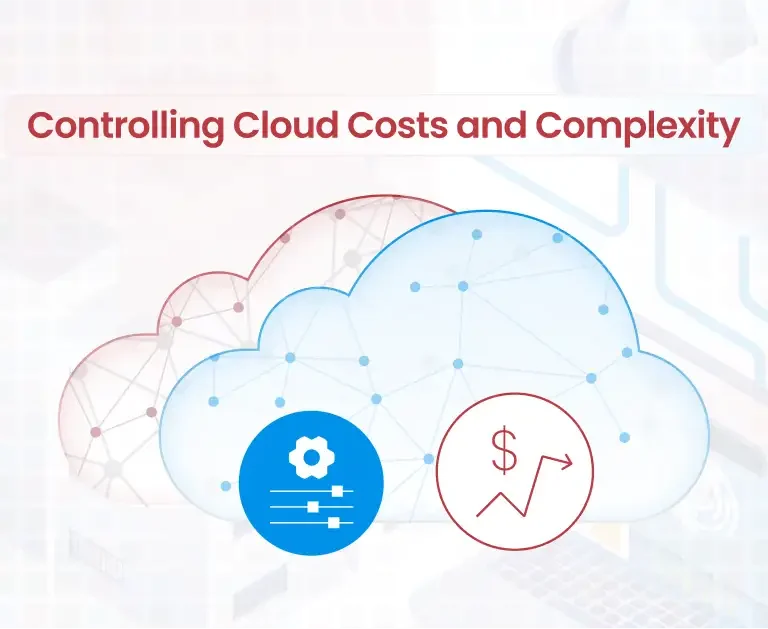
  • Cost Management: By overseeing cloud expenditures and ensuring optimal use of cloud resources, a CCoE can significantly reduce unnecessary costs.
  • Risk Mitigation: With their expertise, CCoE teams can identify and address potential security and compliance risks associated with cloud computing.
  • Enhanced Agility: A CCoE can accelerate cloud adoption and innovation by providing the necessary tools, frameworks, and guidance.
  • Knowledge Hub: As a central repository of cloud expertise and knowledge, a CCoE can effectively disseminate best practices and insights throughout the organization.
How CloudKitect Fills the Gap

CloudKitect emerges as a comprehensive solution that becomes an organizations CCoE. Here’s how:
  • Expertise Across Domains: CloudKitect brings together experts from different cloud domains with a wealth of knowledge and experience. This ensures that the components and patterns we provide are best in class and thoroughly tested for security, scalability, and compliance.
  • Best Practices and Standardization Tools: CloudKitect provides tools and resources to help standardize cloud practices across the organization. This includes templates, best practice guides, and out of the box compliance with standards like NIST-800, PCI, CIS etc.
  • Governance Frameworks: With CloudKitect, organizations can implement robust governance frameworks to ensure that cloud operations are secure, compliant, and aligned with business goals.
  • Cost Management Solutions: CloudKitect with its environment aware components offer effective cloud cost management, helping organizations to maximize their cloud investments.
  • Training and Skill Development: CloudKitect recognizes the importance of continuous learning in the cloud domain. It offers training programs and workshops to upskill employees, ensuring that the organization’s workforce remains adept and efficient in using cloud technologies.
  • Customization and Flexibility: Understanding that each organization has unique needs, CloudKitect offers customizable solutions that can adapt to specific business requirements.
  • Continuous Innovation and Support: CloudKitect stays at the forefront of cloud technology, offering ongoing support and updates on the latest cloud trends and innovations. This is like having a team of architects working for your organization around the clock.

Conclusion

For organizations looking to harness the full potential of cloud computing, the establishment of a Cloud Center of Excellence is essential. CloudKitect steps in as a pivotal ally in this journey, bridging gaps with its expertise, tools, and continuous support. By partnering with CloudKitect, organizations not only expedite their cloud adoption by 10X but also ensure that it is sustainable, secure, and aligned with their overarching business objectives. The future of cloud computing is bright, and with CloudKitect, businesses are well-equipped to navigate this promising terrain.

Talk to Our Cloud/AI Experts

This field is for validation purposes and should be left unchanged.
Name
Please let us know what's on your mind. Have a question for us? Ask away.

Search Blog

About us

CloudKitect revolutionizes the way technology startups adopt cloud computing by providing innovative, secure, and cost-effective turnkey solution that fast-tracks the digital transformation. CloudKitect offers Cloud Architect as a Service.

Subscribe to our newsletter

This field is hidden when viewing the form

Next Steps: Sync an Email Add-On

To get the most out of your form, we suggest that you sync this form with an email add-on. To learn more about your email add-on options, visit the following page (https://www.gravityforms.com/the-8-best-email-plugins-for-wordpress-in-2020/). Important: Delete this tip before you publish the form.